
About the manufacturer
Are you a manufacturer or a trading company?
A manufacturer. CNC Prototyping Service is Dongguan Zhuohang Ltd, a build-to-print CNC machining factory in Dongguan, China, founded in 2005, with a floor of 100-plus machines and 100+ people in a 6,800 m² facility. Factory visits and audits are welcome.
Which processes do you run in-house?
CNC milling (3-, 4-, and 5-axis), CNC turning, mill-turn, and precision grinding run in-house. Surface finishing such as anodizing and plating, and some heat treatment, are completed through qualified partners and bundled under one order.
Quoting and drawings
What should I send to get an accurate quote?
A GD&T-specified drawing (2D PDF or DXF), a 3D model (STEP or IGES), the material grade, surface finish, and quantity. For complex parts, both the 2D drawing and the 3D model are needed so the shop quotes from real geometry, not a guess.
What tolerance can you hold?
±0.003 mm on CNC milling, ±0.002 mm on CNC turning, and ±0.002 mm for precision grinding. Every critical GD&T characteristic is verified on a Hexagon CMM, with process capability Ppk ≥ 1.67 at the initial study on key characteristics and ≥ 1.33 on general characteristics.
How soon will I get a response?
The factory's fastest response is within 30 minutes for a first reply, with a design-for-manufacturing review and quote following once the drawing and requirements are reviewed. A callout the shop cannot hold is flagged at this stage, before any cutting.
Ordering, lead time, and materials
What is your minimum order quantity?
One piece. Prototype and single-part orders are taken alongside production runs, so you can validate a GD&T-specified part before committing to volume. There is no minimum-order threshold to clear.
What are your lead times?
Roughly 3, 7, or 30 days, set by part complexity and the number of process steps. Simple parts ship in about 3 days; parts with surface finishing or 10–20 process steps fall into the longer 30-day tier.
Can I get a prototype before a production order?
Yes. Because the MOQ is 1 piece, you can prototype and inspect against your GD&T callouts before committing to volume. The prototype's programs, fixtures, and datum alignment then carry over to production unchanged.
Which materials do you machine?
Aluminum, stainless steel, carbon and alloy steel, brass, copper, titanium, and magnesium, plus engineering plastics including POM and PEEK. Every incoming lot is XRF-checked against its mill certificate before machining.
Quality and contact
Are you certified?
Yes — ISO 9001:2015 (No. 116024/A/0001/UK/En), IATF 16949:2016 (No. 131941/A/0001/SM/En), and ISO 14001:2015 (No. 116024/B/0001/UK/En). The IATF 16949 scope excludes product design under Clause 8.3.
What happens if a part is non-conforming?
A part is non-conforming only when the dimensional report shows a controlled characteristic out of tolerance. On confirmation, the part is remade. The measured-value report is how a non-conformance is identified, so there is no ambiguity about what failed.
Who is my point of contact?
Felipe Iglesias, Business Development Director, at [email protected] or +86 13126536955. He responds in English, Portuguese, Spanish, French, and Chinese, or Chinese, and is your single contact through quoting, production, and delivery.
Which materials and industries do you cover?
We machine aluminum, stainless steel, titanium, brass, copper, and Inconel, plus engineering plastics including PEEK and Delrin. These CNC machined prototypes go into medical, aerospace, automotive, robotics, electronics, and defense applications, with the inspection, traceability, and documentation each sector requires before it places an order.
Pricing, finishing, and shipping
How is pricing structured, and why does the first part cost more?
The price is material plus setup plus cycle time plus inspection, and the setup is a fixed cost absorbed across the quantity. One prototype carries the entire setup by itself, which is why the first part costs more per unit than the tenth; at volume the setup amortises and the price settles toward the material and machine time. A supplier whose price barely moves between one piece and a hundred is not amortising the setup in a way that benefits you.
Can you do surface finishing and heat treatment?
Machining, deburring, and bead blasting run in-house; anodising, plating, powder coating, and heat treatment above 500 deg C go to qualified partners, with the handoff named on the quote. The finish is specified on the drawing, and where a coating adds thickness the allowance is stated before the part is plated rather than discovered after.
How are parts shipped, and what documents come with them?
Prototypes ship by air express, and every shipment carries the commercial invoice, packing list, material certificate, and CMM inspection report against your drawing. The documentation is what lets you reconcile what you ordered with what you received the moment the box arrives, rather than after you have paid for tooling.
What is the payment process?
Payment is typically by bank transfer (T/T), with terms negotiable case by case. The terms are confirmed in writing when the order is placed, so there are no surprises at the invoice, and a deposit or milestone schedule can be arranged for larger programs.
Industries, design support, and documentation
Which industries do you serve?
Medical, aerospace, automotive, robotics, electronics, and defense, with the inspection, traceability, and documentation each sector requires before it places an order. The machining process is the same across sectors; what changes is the paperwork and the tolerance discipline, and both are stated up front rather than discovered at audit time.
Do you provide design-for-manufacturability feedback before quoting?
Yes, and it is the step that saves most buyers money. The estimator reads the drawing for features that are impossible, needlessly tight, or expensive - a sharp internal corner, a tolerance tighter than the function needs, a wall that will chatter - and flags them before any metal moves, so you correct the design rather than pay for scrap.
Can I audit the factory before ordering?
Yes, on-site or by video at No. 8, Shuibian Songyuan Road, Hengli Town, Dongguan, Guangdong, China 523470. An audit is the fastest way to confirm the machine list, the quality system, and the floor match the quote, and a genuine manufacturer will walk you through the plant without hesitation.
What is the difference between a prototype and a production build?
Usually only quantity and scheduling. Both run on the same machines and the same process, which is what makes a later ramp a scheduling change rather than a re-qualification. The first article you approve is made exactly the way the production parts will be made, so the record you build on a one-off carries straight into volume.
What file formats do you accept?
STEP and IGES for 3D geometry, and PDF or DXF for 2D drawings. A 3D STEP file plus a toleranced 2D drawing gives the fastest and most accurate quote, because it carries both the geometry and the intent, and the estimator is not reconstructing your design from a screenshot.
Do you provide PPAP and APQP documentation?
Yes, for programs that need it: process flow chart, control plan, SPC chart, and PFMEA, assembled into the full automotive-grade package. State the PPAP level in the RFQ and the documentation is priced honestly rather than discovered at the end of the program.
How is my intellectual property protected?
Drawings are held inside the quoting system rather than circulated by email, a signed NDA is returned if you provide one, and files are never shared with a third party without written permission. Sensitive paper files are stored in a smart-lock space and digital data on encrypted drives.
Who is my point of contact, and which languages do they speak?
Felipe Iglesias, Business Development Director, at [email protected] or +86 13126536955. He responds in English, Portuguese, Spanish, or French, so the conversation does not get lost between sales and the floor.
Inspection, material verification, and revisions
What inspections happen before my parts ship?
Critical dimensions are verified on Hexagon CMMs against your drawing, and the report ships with the parts. The 10:1 rule is applied to every feature - the instrument is about ten times more accurate than the tolerance band - so a tight dimension is measured with a gauge that can actually see it, not a hand tool stretched to its limit.
How is incoming material verified, and are parts traceable?
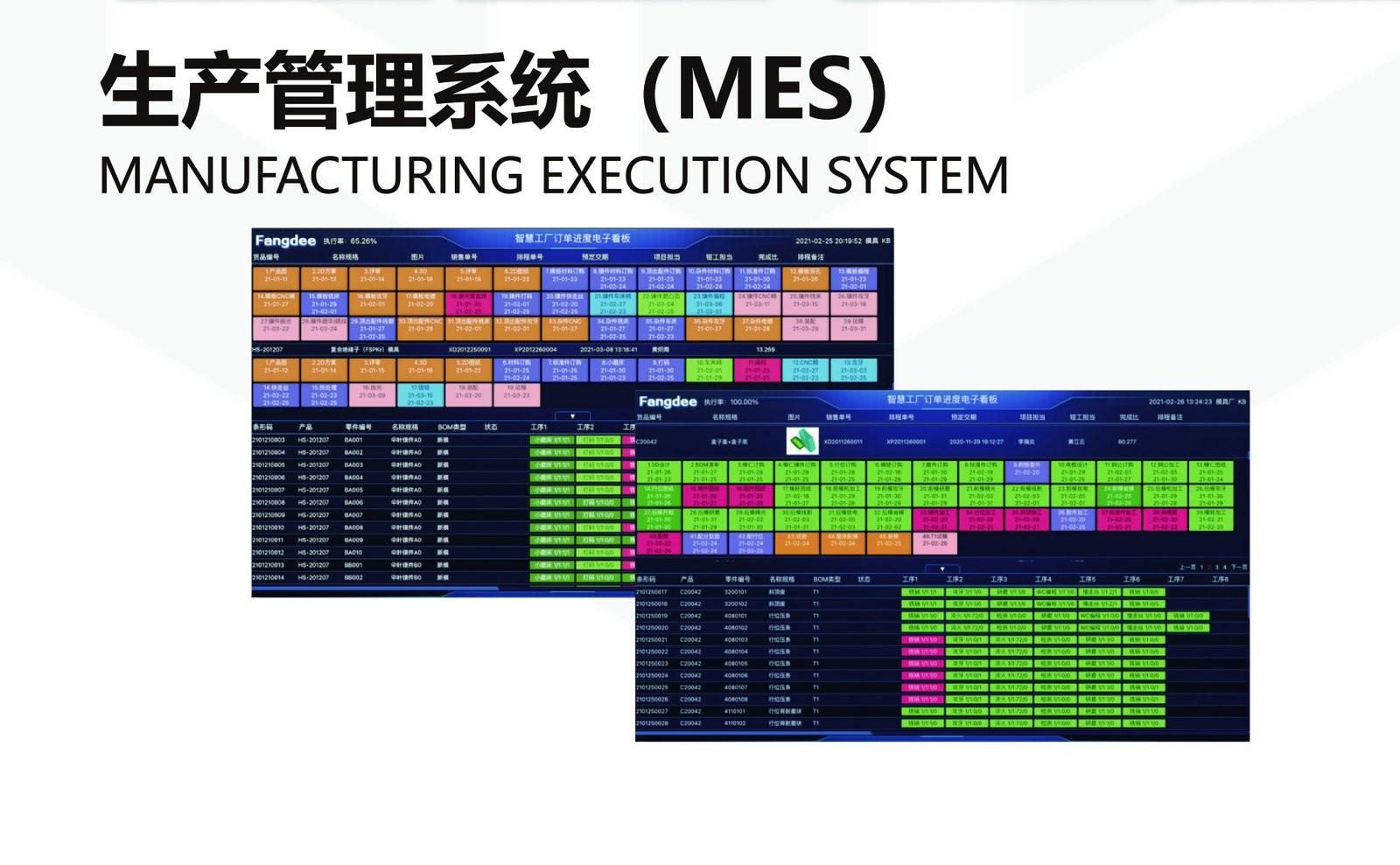
Every incoming lot is XRF-checked against its mill certificate before it reaches a machine, and the certificate ships with your parts. The MES/ERP system links each part to its raw material lot, process parameters, machine, batch, operator, and inspection data, so a part can be followed backward from the box to the bar stock it came from.
What happens if my drawing has an error?
The estimator catches it before quoting rather than after machining. If a tolerance is impossible, a corner cannot be cut, or a dimension contradicts another, you are told up front so you can correct the drawing instead of paying for a part that cannot exist.
How are design revisions handled after quoting?
A revision is re-quoted against the changed features only, and the revision level is confirmed in writing before the new work starts. That confirmation is what prevents the classic failure where the shop machines revision A while you think you ordered revision B.
Do you offer expedited or rush service?
Yes, for parts whose schedule justifies it. A rush simply reorders the queue and may add a premium, but the process and the inspection do not change - a fast part still ships with its CMM report and material certificate, because speed is not an excuse to skip verification.
Can you help with an existing part that needs measuring or re-engineering?
Yes. If you have a physical part and no drawing, send photographs and dimensions and we can advise on measuring and reverse-engineering it into a CAD model before machining. A clean model from a measured part is the difference between a quote and a guess, and it is a service worth asking about early.
What is your production capacity, and can you handle volume?
The facility runs 100+ CNC machines across 6,800 m2 with 100+ staff, so a validated prototype scales into volume on the same machines and the same process. The depth across 3-axis, 4-axis, 5-axis, turning, Swiss-type, grinding, and wire EDM means a part routes to the right machine rather than queueing behind whatever is free.
Which regions do you serve?
Austria, Belgium, the Czech Republic, Denmark, France, Germany, Greece, Hungary, Ireland, Italy, the Netherlands, Spain, Sweden and the United Kingdom in Europe; Brazil, Canada, Mexico and the United States in the Americas; China, Israel, Japan, Singapore and Sri Lanka in Asia; Australia and New Zealand in Oceania; and South Africa in Africa - based in Dongguan, China, and serving customers worldwide with export documentation and English-speaking engineering contact.
What this shop actually runs
If you ask for capability evidence, you deserve a specific answer. This facility operates 100+ CNC machines across 6,800 m2 in Dongguan, China, staffed by 100+ people. The machines, listed by category:
- 5-axis machining centres (10+) - Mazak VARIAXIS I-600 (510/910/510 mm travel, 12,000 rpm, 22 kW, 71.6 N·m, 30-tool BT40) and Mazak INTEGREX I-250H S (B-axis 0.0001°, 24 kW, 124 N·m, 38-tool HSK-A63). Applied to compound-angle parts, single-setup multi-face prismatic work, and aerospace fittings where datum transfer loss is unacceptable.
- 3-axis / 4-axis machining centres (50+) - Brother SPEEDIO S500Z2N / S700Z2N (10,000 rpm, 14/21-tool ATC, 0.7 s tool-to-tool, Z-axis 2.2 G) and Mazak VCE-430A L / VCE-570C L (10,000 rpm, 118 N·m, 24-tool ATC). Applied to prismatic parts, plates, brackets, housings.
- Swiss-type turning centres (10+) - Citizen Cincom A20-3F7 (Φ20 mm, 10,000 rpm), TSUGAMI B0206-III / B0205-III (Φ20 mm, 0.1 µm), STAR SR-32JII / SR-32J Type N (Φ32 mm, 8,000 rpm). Applied to long, slender rotational parts at ±0.002 mm.
- CNC turning centres (20+) - HEADMAN T70M/1250 (720 mm swing, 117 mm bore, 3,000 rpm, BMT75 12-station turret). Applied to shafts, bushings, flanges up to ±0.002 mm.
- Wire EDM (5+) - Sodick AQ535L (550/350/300 mm travel, ±20° taper, 800 kg workpiece). Applied to hardened tool steel, internal splines, sharp internal corners that milling cannot reach.
- Inspection: Hexagon CMM + 20+ gauges - Hexagon CMM for coordinate measurement, plus vision system, profilometer, hardness tester, coating thickness gauge, XRF for material verification. The 10:1 rule (gauge 10x more accurate than the band) is applied to every feature.
- Machine highlights - VARIAXIS I-600: one-setup multi-face 5-axis + MAZA-CHECK auto-calibration; INTEGREX I-250H S: DONE-IN-ONE mill-turn, B-axis 0.0001° + Ai thermal shield; SPEEDIO S500Z2N / S700Z2N: Z-axis 2.2 G + 0.7 s ATC; Swiss-type: guide-bush switchable + 0.1 µm resolution.
Tolerance bands: ±0.003 mm milled, ±0.002 mm turned, ±0.002 mm ground or wire-cut. Capability indices: Ppk >= 1.67 at the initial study; Cpk >= 1.33 ongoing in production.
Certifications: ISO 9001:2015 (116024/A/0001/UK/En) · IATF 16949:2016 (131941/A/0001/SM/En, design clause 8.3 excluded) · ISO 14001:2015 (116024/B/0001/UK/En), held by Dongguan Zhuohang Ltd (USCC 91441900MA4UWT6X39, since 2005).
Service area: we supply Austria, Belgium, the Czech Republic, Denmark, France, Germany, Greece, Hungary, Ireland, Italy, the Netherlands, Spain, Sweden and the United Kingdom in Europe; Brazil, Canada, Mexico and the United States in the Americas; China, Israel, Japan, Singapore and Sri Lanka in Asia; Australia and New Zealand in Oceania; and South Africa in Africa, with worldwide delivery from China.
Contact: Felipe Iglesias, [email protected], +86 13126536955.
Question not answered here?
Email [email protected] or call +86 13126536955 — send your drawing and get a straight answer.
What payment methods and terms do you accept?
PayPal, Western Union, and bank or wire transfer. For long-term customers we also accept Net 30, Net 45, and Net 60 terms after an approved credit review.
What happens if a machined part has a manufacturing defect?
We provide free repair or remake for parts with manufacturing defects. All repair and remake costs, including return and shipping, are on us.
How quickly do you respond to inquiries?
We respond to every inquiry within 24 hours. Quotations for standard parts are returned within 48 hours; print reviews and DFM feedback are usually back within one business day.
Standards referenced on this page
- IATF 16949:2016 — Automotive quality management system standard
- ASTM A582/A582M-12 — Standard Specification for Free-Machining Stainless Steel Bars
- ASTM B348/B348M-21 — Standard Specification for Titanium and Titanium Alloy Bars and Billets